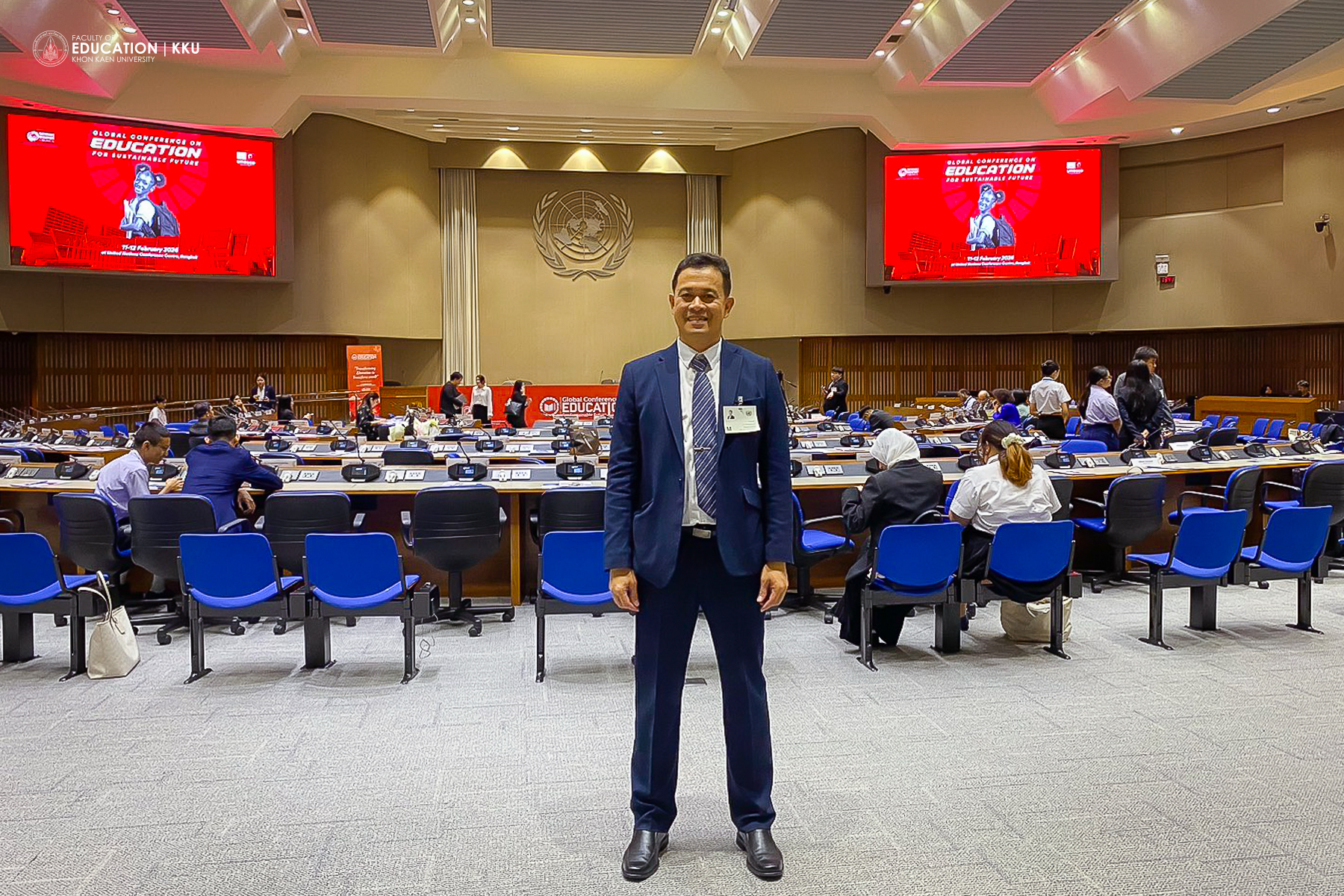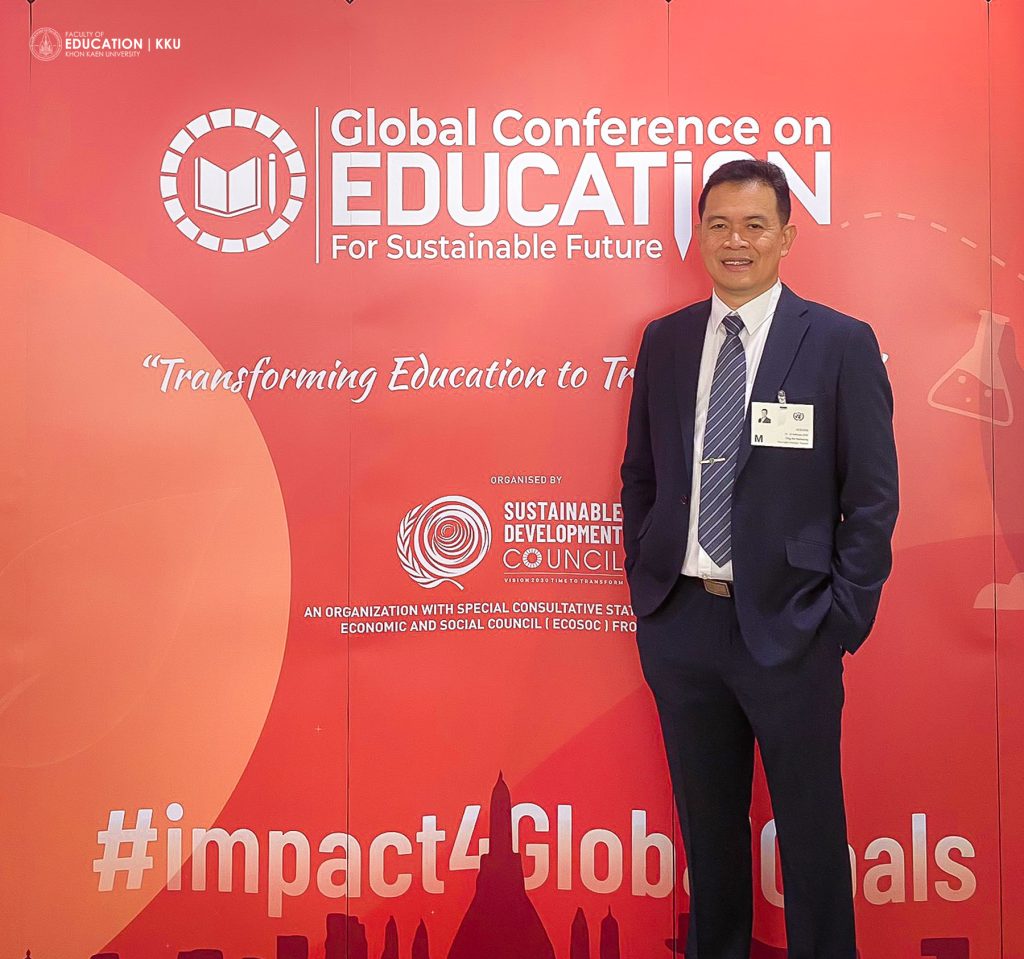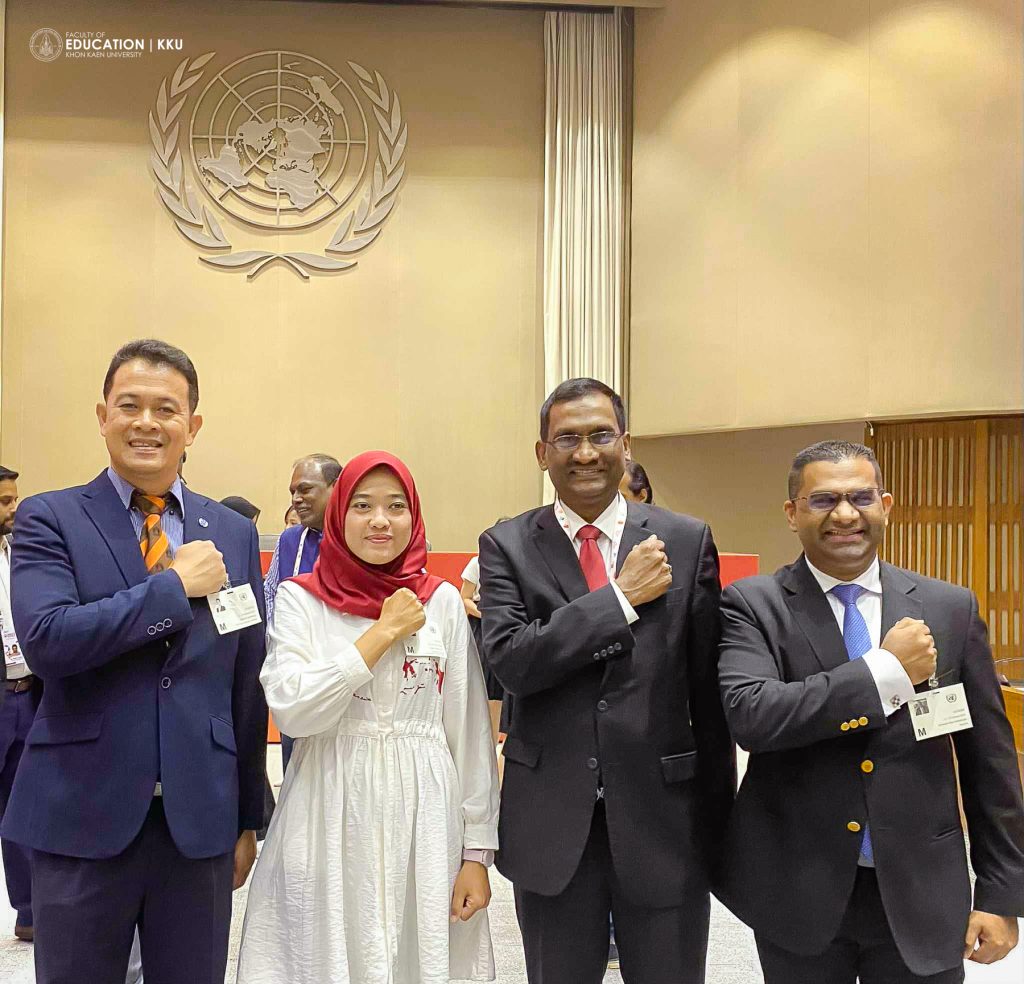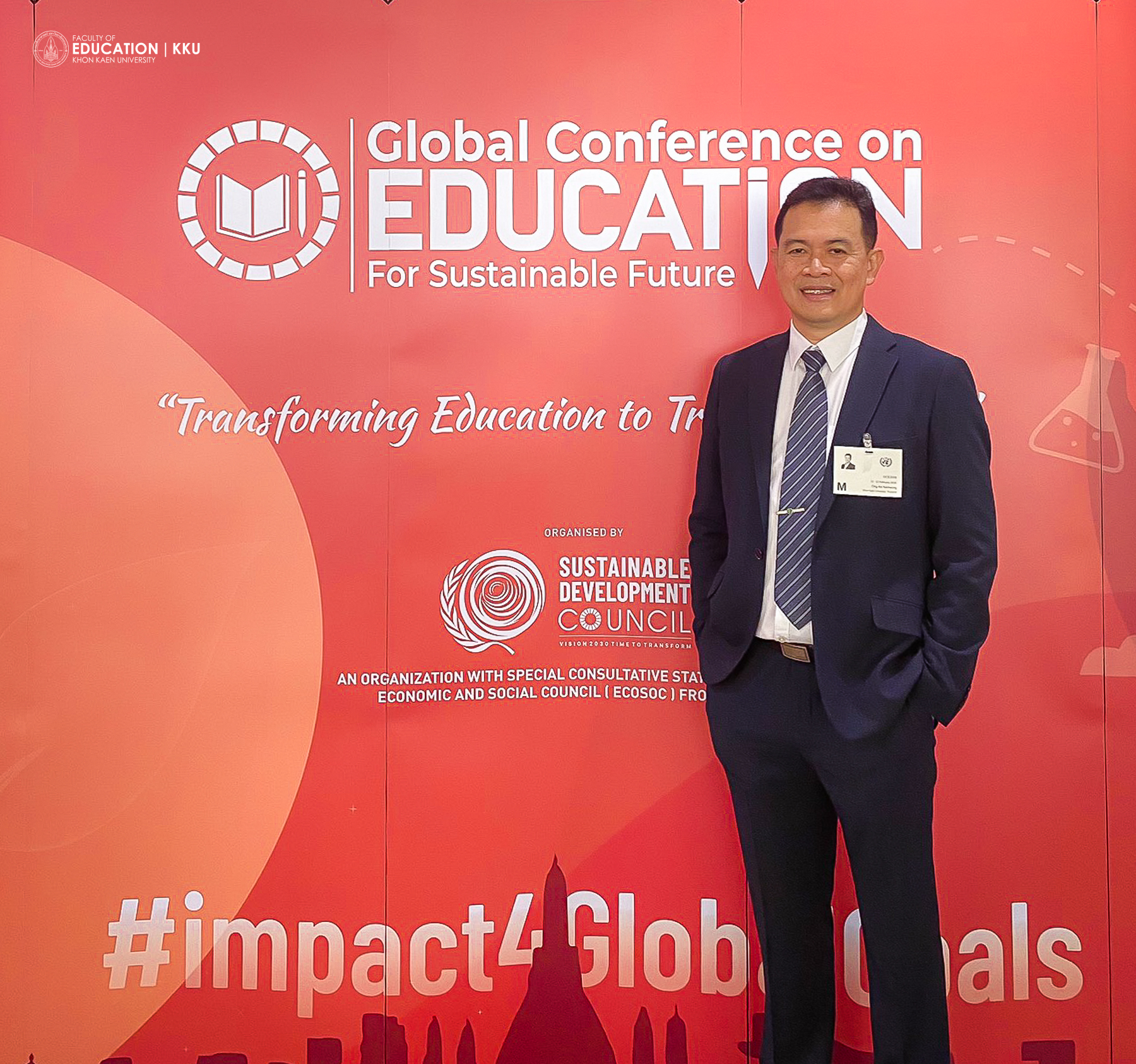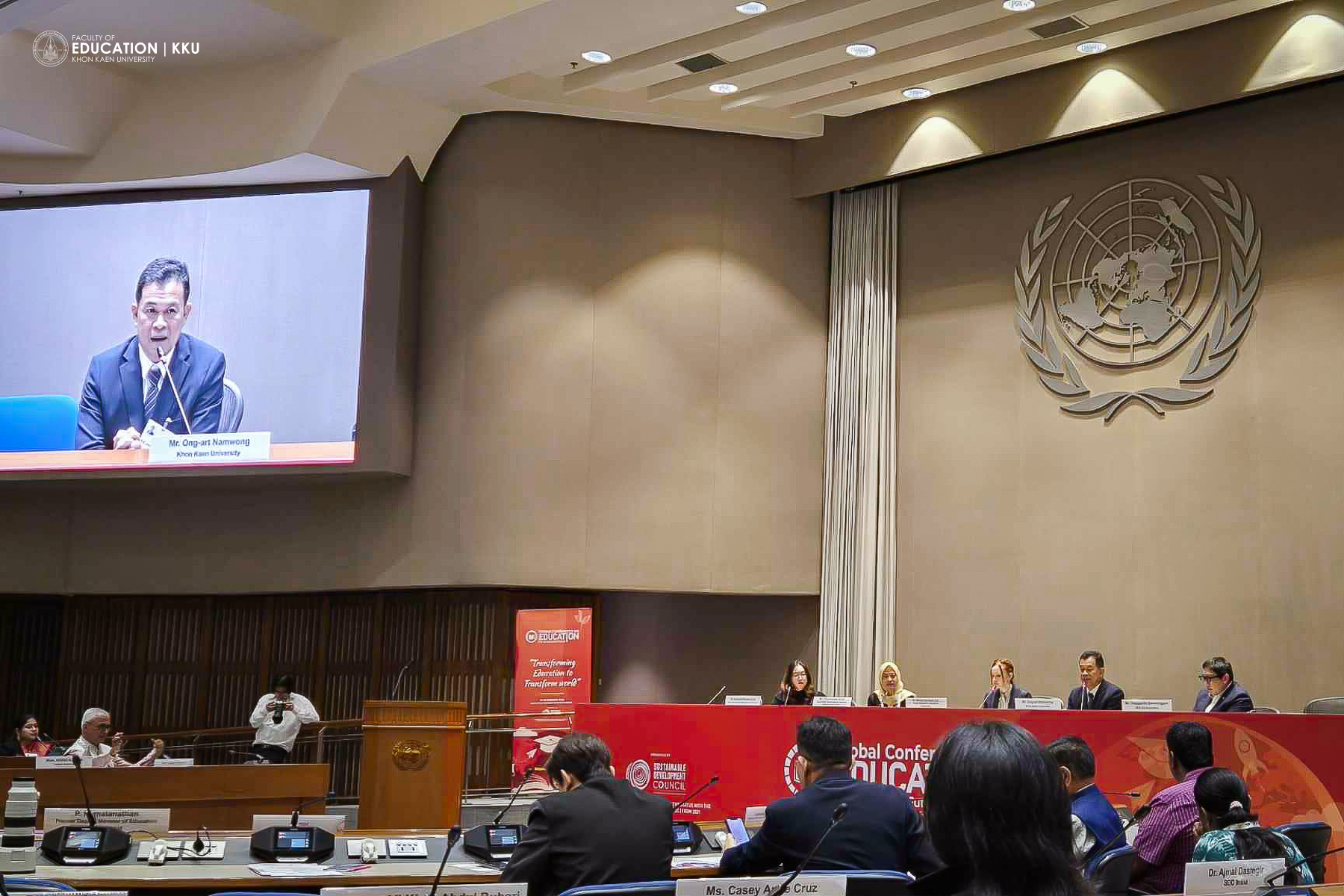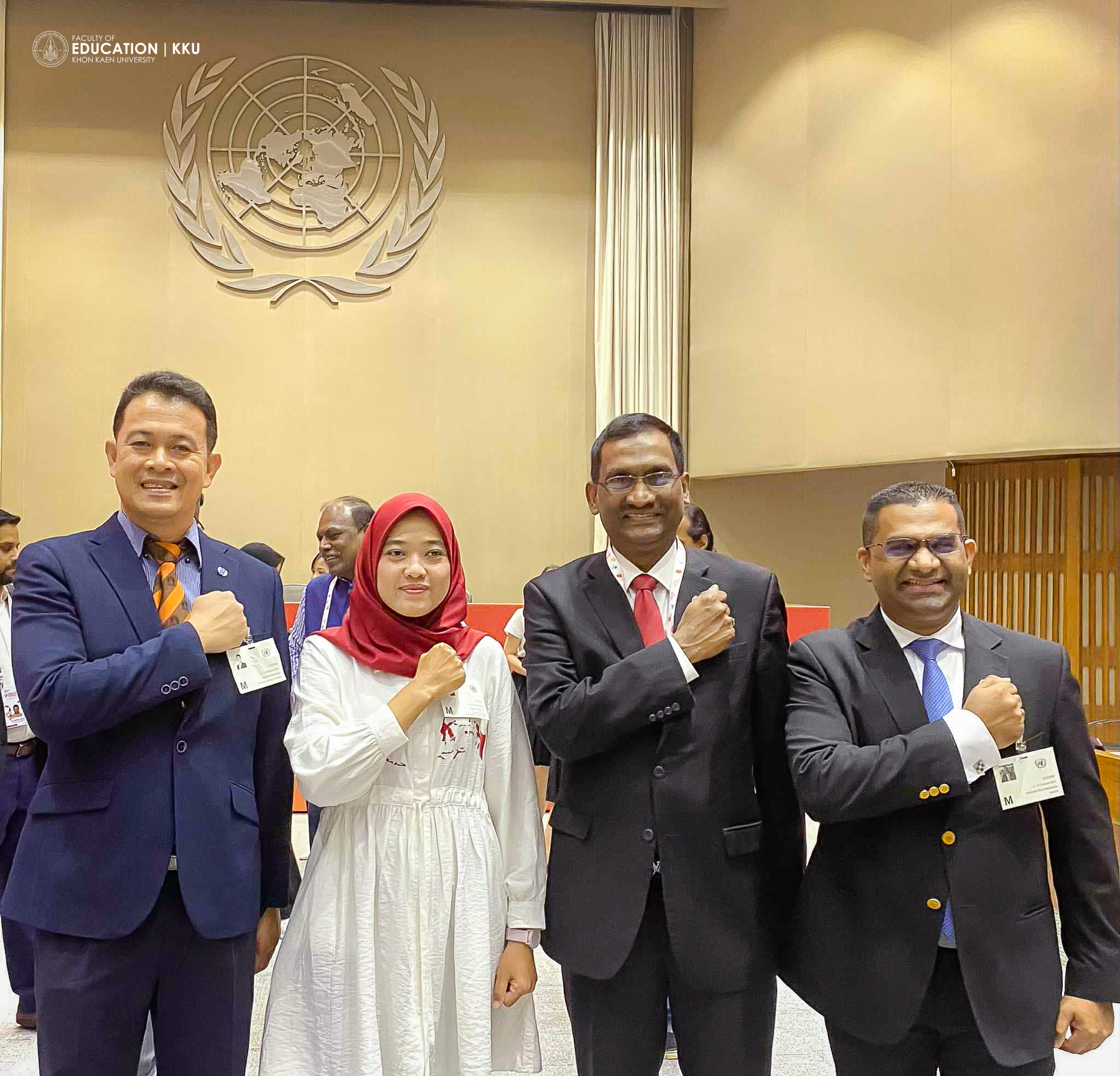
ผศ.ดร.องอาจ นามวงศ์ หัวหน้าสาขาวิชาการศึกษาภาษาและประธานคณะกรรมการบริหารหลักสูตรสาขาการสอนภาษาอังกฤษให้ผู้มีพื้นฐานอื่นนอกจากภาษาอังกฤษ (TESOL) หลักสูตรนานาชาติ คณะศึกษาศาสตร์ มหาวิทยาลัยขอนแก่น ได้รับเกียรติเป็นวิทยากรผู้ทรงคุณวุฒิ (Panel Speaker) ในงานประชุมระดับนานาชาติ Global Conference on Education for a Sustainable Future (GCE 2026) ภายใต้ธีม “Transforming Education to Transform the World” ณ ศูนย์ประชุมสหประชาชาติ (UNCC) กรุงเทพมหานคร เมื่อวันที่ 11 กุมภาพันธ์ 2569 การประชุมครั้งนี้จัดโดย Sustainable Development Council (SDC) ร่วมกับภาคีเครือข่ายระดับโลก เพื่อระดมความเห็นในการปฏิรูปการศึกษาให้มีความยืดหยุ่น ครอบคลุมคนทุกกลุ่ม และพร้อมรับมือกับความเปลี่ยนแปลงที่รวดเร็วของโลกในปัจจุบัน
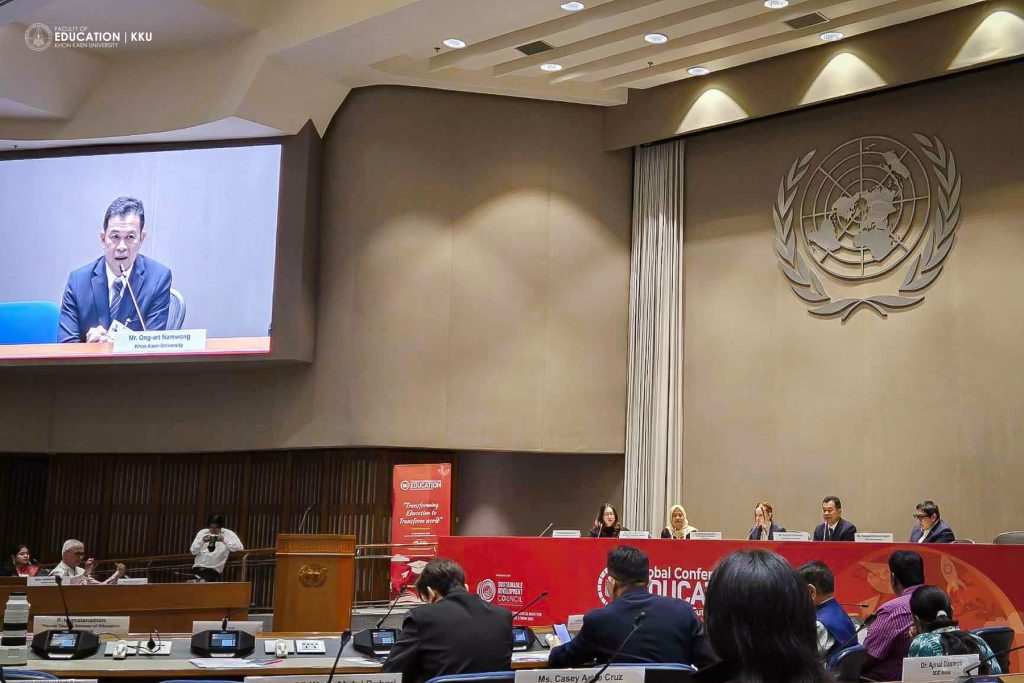
ในเวทีเสวนาหัวข้อ “Strengthening education systems for the implementation of sustainable development goal 4” ผศ.ดร.องอาจ นามวงศ์ ได้นำเสนอแนวคิด “Glocalization: Leave No One Behind” โดยได้สะท้อนภาพความท้าทายในบริบทของประเทศไทย โดยเฉพาะในพื้นที่ภาคตะวันออกเฉียงเหนือที่ความยากจนและปัญหาทางสังคมยังคงเป็นอุปสรรคสำคัญต่อการเข้าถึงการศึกษาที่มีคุณภาพ พร้อมเน้นย้ำว่าการสร้างความยั่งยืนทางการศึกษาไม่ได้ขึ้นอยู่กับการขยายโอกาสเพียงอย่างเดียว แต่ต้องมุ่งเน้นการสร้าง “การเรียนรู้ที่มีความหมาย” ที่เชื่อมโยงมาตรฐานสากลเข้ากับวิถีชีวิตจริงของผู้เรียนในท้องถิ่น โดยมี “ครู” เป็นกลไกหลักในฐานะผู้นำการเปลี่ยนแปลงที่จะต้องได้รับการพัฒนาทักษะวิชาชีพและสมรรถนะเชิงดิจิทัล อย่างต่อเนื่องเพื่อให้เท่าทันต่อวิกฤตการณ์และบริบทโลกที่เปลี่ยนไป รวมถึงการสร้างความเข้าใจที่ตรงกันในกลุ่มผู้มีส่วนได้ส่วนเสียทุกภาคส่วน เกี่ยวกับเป้าหมายทางการศึกษา เพื่อให้ทุกคนสามารถกำหนดบทบาทและก้าวเดินไปในทิศทางเดียวกัน กระบวนการดังกล่าวไม่ได้เป็นเพียงการขยายโอกาสทางการศึกษาเท่านั้น แต่เป็นการปรับเปลี่ยนระบบนิเวศการเรียนรู้จากการยึดครูเป็นศูนย์กลาง ไปสู่ความร่วมมือเพื่อเป้าหมายในการพัฒนาทรัพยากรมนุษย์ที่มีคุณภาพและมีทักษะพร้อมสำหรับอนาคต
การร่วมแบ่งปันประสบการณ์ในครั้งนี้ ไม่เพียงแต่สะท้อนถึงบทบาทของนักการศึกษาที่มุ่งนำปัญหาจริงจากหน้างานมาวิจัยและพัฒนา แต่ยังเป็นเสียงสะท้อนสำคัญถึงความจำเป็นในการปฏิรูปการศึกษาที่ยั่งยืน โดยมุ่งเน้นการแก้ปัญหาความเหลื่อมล้ำและลดช่องว่างทางการศึกษาเพื่อให้เด็กทุกคนมีโอกาสเข้าถึงการเรียนรู้ที่มีคุณภาพอย่างเท่าเทียมและทั่วถึง ซึ่งเป็นกุญแจสำคัญในการขับเคลื่อนสังคมตามเป้าหมายการพัฒนาที่ยั่งยืน
ED KKU Faculty Member Joins UN Forum, Promoting “Glocalization” for Educational Equality at GCE 2026
Asst. Prof. Dr. Ong-art Namwong, Chair of the Language Education Division and Chairperson of the TESOL International Program at the Faculty of Education, Khon Kaen University, was honored as a Panel Speaker at the Global Conference on Education for a Sustainable Future (GCE 2026). Held under the theme “Transforming Education to Transform the World,” the conference took place at the United Nations Conference Centre (UNCC) in Bangkok on February 11, 2026. This global event was organized by the Sustainable Development Council (SDC) in collaboration with international partners to drive educational reform that is resilient, inclusive, and responsive to rapid global shifts.
During the panel session titled “Strengthening education systems for the implementation of Sustainable Development Goal 4,” Asst. Prof. Dr. Ong-art presented the concept of “Glocalization: Leave No One Behind.” He highlighted the challenges within the Thai context, particularly in the Northeast, where poverty and social barriers remain significant obstacles to quality education. He emphasized that educational sustainability is not just about expanding opportunities but creating “Meaningful Learning” that bridges international standards with the local realities of learners.
He identified “Teachers” as the primary agents of change who must undergo continuous professional and digital competency development to remain relevant in global crises. Furthermore, he called for a shared understanding among all stakeholders to align their roles toward a common goal. This process represents a shift in the learning ecosystem—from teacher-centered models to collaborative efforts aimed at developing high-quality human resources equipped for the future.
This participation underscores the role of educators in bridging field-based research with policy to address inequality. It serves as a vital call for sustainable educational reform, ensuring that every child has equitable access to high-quality learning, which is the key to driving society toward the Sustainable Development Goals (SDGs).